Tax Rate Based On Income
Tax Rate Based On Income. 7 rows whether your taxable income is $40,000 a year, $400,000, or $40 million, the first $10,000 you. You may also use the tax calculator for resident individuals (xls, 96kb) to estimate your tax payable.
The concept of income is one that gives savings and purchase opportunities to an individual. The issue is that income is hard to define conceptually. Therefore, the definitions of the term "income" can vary according to the research field. The article below we'll analyze some crucial elements of income. We will also consider rents and interest.
Gross income
Net income is the total sum of your earnings after taxes. While net income is the total amount of your earnings after taxes. It is crucial to know the difference between gross and net income , so that you can properly report your earnings. Gross income is the better measure of your earnings since it gives you a more accurate view of the amount of money that you can earn.
The gross income is the amount which a company makes before expenses. It allows business owners to look at sales across different time periods and identify seasonality. It also helps business managers keep in the loop of sales quotas and productivity requirements. Knowing the amount the business earns before expenses is crucial in managing and growing a profitable enterprise. It allows small-scale businesses to know how they're operating in comparison with their competitors.
Gross income can be determined for a whole-company or product-specific basis. In other words, a company can calculate its profit by product by using tracking charts. When a product sells well, the company will have a higher gross income than a business that does not have products or services at all. This will help business owners choose which products to focus on.
Gross income can include interest, dividends rental income, lottery gains, inheritances and other income sources. But, it doesn't include deductions for payroll. If you are calculating your income, make sure that you subtract any taxes you are legally required to pay. Additionally, your gross income must not exceed your adjusted amount, that is what you actually take home after you have calculated all the deductions you have made.
If you're employed, you likely already know what the Gross Income is. In the majority of cases, your gross income is the amount you are paid before tax deductions are deducted. The information is available in your pay-stub or contract. If you're not carrying the documentation, you can get copies.
Gross income and net income are significant aspects of your financial plan. Understanding and interpreting them can aid in the creation of a forecast and budget.
Comprehensive income
Comprehensive income refers to the total amount in equity over a period of time. This measurement excludes changes to equity resulting from investment made by owners as well as distributions made to owners. It is the most frequently used method of assessing the efficiency of businesses. The amount of money earned is an crucial aspect of an organization's performance. Therefore, it's crucial for owners of businesses to get this.
Comprehensive income can be defined in FASB Concepts Statement number. 6 and is comprised of variations in equity from sources that are not the owners of the company. FASB generally follows the all-inclusive concept of income however, it has made a few exceptions that require reporting modifications in assets and liabilities in the results of operations. The exceptions are detailed in the exhibit 1 page 47.
Comprehensive income includes the revenue, finance expenses, taxes, discontinued operations, in addition to profit share. It also comprises other comprehensive income, which is the gap between the net income recorded on the income account and the comprehensive income. Other comprehensive income also includes gains that have not been realized in the form of derivatives and available-for-sale securities such as cash-flow hedges. Other comprehensive income includes actuarial gains from defined benefit plans.
Comprehensive income provides a means for companies to provide their customers with additional information on their performance. As opposed to net income, this measure is also inclusive of unrealized holding gains and gains from foreign currency translation. Although these are not part of net income, they're important enough to be included in the balance sheet. Furthermore, it provides more comprehensive information about the company's equity.
Comprehensive income also includes unrealized gains and losses on investments. The reason for this is that the value of equity of a company can change during the period of reporting. But, it is not considered in the formula for calculating net income, as it is not directly earned. The variation in value is recorded under the line of equity on the report of accounts.
In the future as time goes on, the FASB has plans to refine the guidelines and accounting standards which will make comprehensive income a much more complete and valuable measure. The goal is to provide additional insights on the business's operations and increase the capacity to forecast future cash flows.
Interest payments
Interest on income earned is taxed at ordinary rate of taxation on earnings. The interest income is added to the total profit of the company. However, individuals have to pay taxes for this income, based on your tax bracket. If, for instance, a small cloud-based application company loans $5000 in December 15th that year, it must pay $1,000 in interest on the 15th day of January of the next year. This is a significant amount for a small business.
Rents
As a landlord If you own a property, you've probably read about rents as a source of income. What exactly are they? A contract rent is an amount that is negotiated between two parties. It may also refer to the extra income that is made by a property owner who isn't obliged to perform any additional tasks. For instance, a monopoly producer might charge more rent than a competitor although he or does not have to do any additional work. The same applies to differential rents. is an additional revenue created by the soil's fertility. It typically occurs during extensive cultivation of land.
A monopoly might also be able to earn quasi-rents , until supply is able to catch up to demand. In this situation, it's feasible to expand the definition of rents in all kinds of monopoly profit. However, it is not a sensible limit to the meaning of rent. It is important to note that rents are only profitable when there is a abundance of capital within the economy.
There are also tax implications on renting residential houses. For instance, the Internal Revenue Service (IRS) does not provide the necessary tools to rent residential property. Therefore, the question of whether renting is an income stream that is passive isn't simple to answer. It is dependent on several aspects But the most important is the degree to which you are involved within the renting process.
When calculating the tax consequences of rental income, you must to think about the possible dangers when you rent out your home. This isn't a guarantee that there will always be renters so you could end with a empty house and no money at all. There are other unplanned expenses which could include replacing carpets as well as repair of drywall. With all the potential risks it is possible to rent your house out to be an excellent passive source of income. If you're able, you keep costs at a low level, renting can provide a wonderful way for you to retire early. It also serves as an investment against rising costs.
While there may be tax implications associated with renting a property You should be aware it is taxed differently than income on other income sources. You should consult an accountant or tax advisor when you are planning to rent properties. Rental income can comprise late fees, pet fees and even work carried out by the tenant as a substitute for rent.
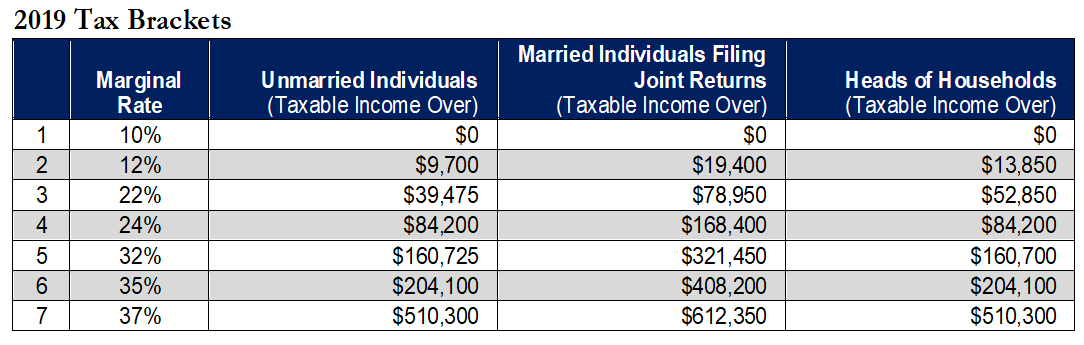
Tax brackets are based on taxable income after all deductions and credits and not gross income or adjusted gross income. It is the actual amount of federal income tax payable. Those tax brackets change when new tax laws are written, depending on what the primary goal of that version of the tax code is.
Everyone Has A Different Effective Tax Rate, Based On Their Income And The Deductions They Take From Their Taxable Income.
Are calculated based on tax rates that range from 10% to 37%. 20.3% on the portion of your taxable income that is more than $166,280. Tax brackets are based on taxable income after all deductions and credits and not gross income or adjusted gross income.
17.84% On The Portion Of Your Taxable Income That Is More Than $145,955 But Not More Than $166,280, Plus.
227 rows a comparison of tax rates by countries is difficult and somewhat subjective, as tax laws in most countries are extremely complex and the tax burden falls differently on different. Please refer to how to calculate your tax for more details. Income taxes in the u.s.
The Following Tax Rates Apply To Individuals Who Are Residents Of Australia.
If you are single and your taxable income is $75,000 in 2022, your marginal tax bracket is 22%. Currently has seven federal income tax brackets, with rates of 10%, 12%, 22%, 24%, 32%, 35% and 37%. But a tax foundation study reveals how much the average person pays overall in taxes after income taxes, fica, business taxes, excise taxes, and deductions and credits have all.
You First Have To Know The Irs Tax Brackets To Understand Your Effective Rate.
When you divide the tax payable with the taxable income of $63,000 and multiply by 100, you get 15.2%. The table shows the tax rates you pay in each band if you have a standard personal allowance of £12,570. However, some of your income will be taxed at the lower tax brackets, 10% and.
The Tax Rate Is The Tax Imposed By The Federal Government And Some States Based On An.
This example teaches you how to calculate the tax on an income using the vlookup function in excel. Federal tax tables list how much you will need to pay. Income tax rates and bands.
Post a Comment for "Tax Rate Based On Income"