Maryland State Income Tax Rate 2022
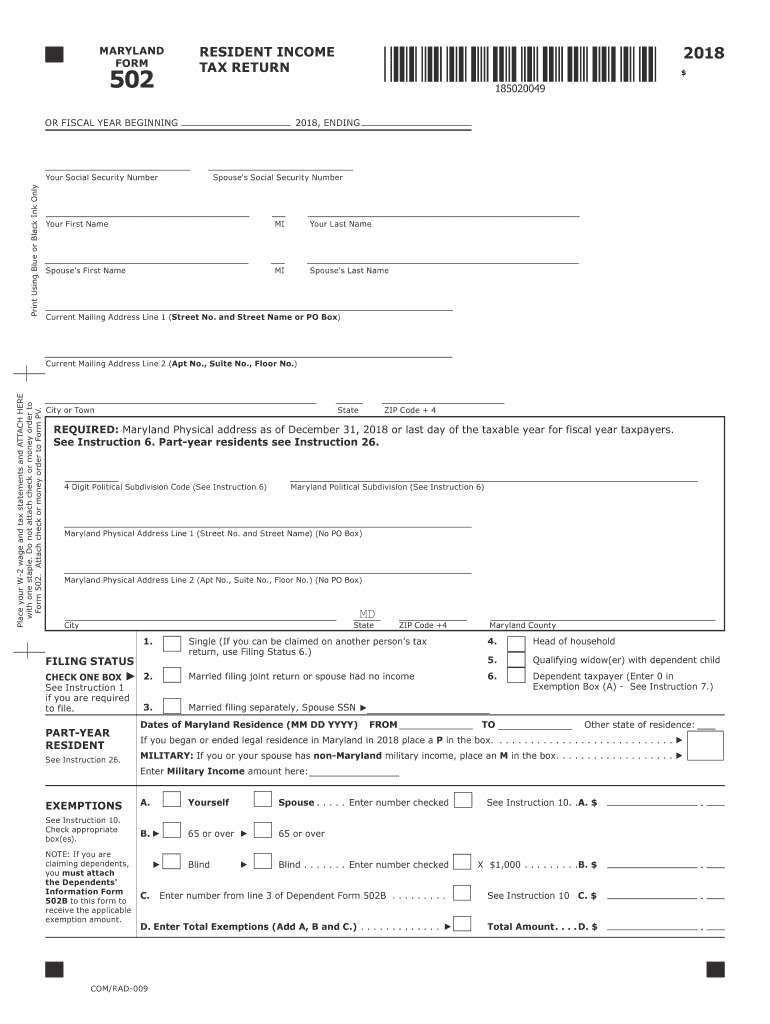
Maryland State Income Tax Rate 2022. Mary's county has changed from 3.17 percent to 3.10 percent. Your average tax rate is 11.98% and your marginal.
The term "income" refers to a financial value that allows savings and consumption opportunities for an individual. However, income is difficult to conceptualize. This is why the definition of income can vary based on what field of study you are studying. The article below we'll take a look at the key components of income. Also, we will look at rents and interest.
Gross income
Your gross earnings are the sum of your earnings before tax. In contrast, net earnings is the sum of your earnings less taxes. It is essential to recognize the distinction between gross and net income so you can accurately record your income. Gross income is a better indicator of your earnings because it offers a greater picture of how much money you make.
Gross income is the total amount the business earns before expenses. It helps business owners assess numbers across different seasons and also determine seasonality. It also assists managers in keeping on top of sales targets and productivity needs. Being aware of how much money an enterprise makes before its expenses can be crucial to directing and making a profit for a business. It aids small-business owners evaluate how well they're performing in comparison to other businesses.
Gross income can be determined according to a product-specific or a company-wide basis. In other words, a company may calculate profits by product with the help of tracking charts. If a particular product is well-loved an organization will enjoy more revenue as compared to a company that does not sell products or services at all. This can help business owners determine which products to focus on.
Gross income includes dividends, interest and rental earnings, as well as gambling results, inheritances and other sources of income. However, it does not include payroll deductions. When you calculate your earnings ensure that you remove any taxes you're required to pay. The gross profit should not exceed your adjusted gross income, which is the amount you will actually earn after figuring out all the deductions you have made.
If you're salaried, you probably already know what annual gross earnings. In most cases, the gross income is the sum you earn before the deductions for tax are taken. The information is available within your pay stubs or contracts. You don't own this document, you can request copies of it.
Gross income and net income are crucial to your financial plan. Understanding and comprehending them will assist you in establishing a spending plan as well as plan your financial future.
Comprehensive income
Comprehensive income measures the change of equity over a given period of time. This measure does not take into account changes in equity that result from private investments by owners and distributions to owners. It is the most commonly employed method to evaluate the performance of businesses. This is an significant aspect of an enterprise's profitability. This is why it's crucial for owners of businesses to learn about the significance of this.
Comprehensive earnings are defined in the FASB Concepts Declaration no. 6. It also includes changes in equity that originate from sources apart from the owners of the business. FASB generally adheres to the all-inclusive concept of income but sometimes it has made exceptions , which require reporting modifications in assets and liabilities in the operating results. The exceptions are detailed in the exhibit 1 page 47.
Comprehensive income comprises revenues, finance costs, tax charges, discontinued operation, and profits share. It also includes other comprehensive income, which is the distinction between net income as included in the income report and the comprehensive income. In addition, other comprehensive income includes gains not realized from securities available for sale as well as derivatives which are held as cash flow hedges. Other comprehensive income can also include gains on actuarial basis from defined benefit plans.
Comprehensive income is a way for companies to provide their stakeholders with additional information about their earnings. As opposed to net income, this measure is also inclusive of unrealized holding gains as well as gains on foreign currency translation. Although they're not part of net income, they are significant enough to be included in the statement. In addition, they provide an overall view of the company's equity.
Comprehensive income includes gains and losses that are not realized and losses from investments. This is because the value of the equity of the business could change over the period of reporting. But, it is not included in the estimation of net income, because it's not directly earned. The amount is shown in the equity section of the balance sheet.
In the near future, the FASB is expected to continue to improve the accounting guidelines and guidelines and will be able to make comprehensive income a more comprehensive and vital measure. The goal is to provide additional information on the business's operations and increase the capacity to forecast the future cash flows.
Interest payments
Interest payments on income are taxed at normal Income tax rates. The interest earnings are included in the overall profits of the company. However, individuals are also required to pay tax upon this income based upon your tax bracket. For instance, if the small cloud-based company takes out $5000 on the 15th of December the company must pay interest of $1000 on the 15th of January in the next year. It's a lot for a small-sized company.
Rents
As a property owner You might have heard about the concept of rents as an income source. What exactly is a rent? A contract rent refers to a rent that is agreed to between two parties. It may also refer to the additional revenue received by a property proprietor which is not obligated do any additional work. For example, a monopoly producer may charge more rent than a competitor and yet doesn't have to carry out any extra work. Additionally, a rent differential is an additional revenue that results from the soil's fertility. It's usually the case under intensive cultivating of the land.
A monopoly can also make quasi-rents , if supply does not catch up to demand. In this situation there is a possibility to expand the meaning of rents and all forms of monopoly earnings. But that isn't a proper limit in the sense of rent. Important to remember that rents can only be profitable when there's not a excess of capital available in the economy.
Tax implications are also a factor that arise when you rent residential properties. It is important to note that the Internal Revenue Service (IRS) does not make it easy to lease residential properties. So the question of whether renting is a passive source of income isn't an easy one to answer. The answer depends on numerous factors and the most significant part of the equation is how involved you are within the renting process.
In calculating the tax implications of rental income, you must to think about the risk from renting out your home. There is no guarantee that there will always be renters, and you could end having a home that is empty with no cash at all. There are unexpected costs for example, replacing carpets and repair of drywall. Whatever the risk that you rent your home, it could prove to be a lucrative passive income source. If you can keep the costs at a low level, renting can provide a wonderful way to begin retirement earlier. This can also act as a way to protect yourself against inflation.
While there are tax issues of renting out a property You should be aware rent is treated differently than income earned in other ways. It is imperative to talk with an accountant or tax lawyer should you be planning on renting the property. Rental income can comprise late fees, pet costs and even any work performed by the tenant to pay rent.
Revised 4/14/22 page 2 of 7 county and municipality real. 28 cents ($0.280) per $100 of the full assessed value. Maryland taxes on retirement income.
Governor Larry Hogan Just Passed The Largest State Tax Cut Package In Our State's History.
If you make $70,000 a year living in the region of maryland, usa, you will be taxed $11,612. 26 rows local income tax rates. This is an online version of the pvw worksheet.
Single Or Married Filing Separately:
The employee tax rates for the following maryland counties have changed: 2021 business income tax forms popular. Find your pretax deductions, including 401k, flexible account.
You Can Use This Calculator To Compute The Amount Of Tax Due, But This System.
9 rows before the official 2022 maryland income tax rates are released, provisional 2022 tax. Revised 4/14/22 page 2 of 7 county and municipality real. Maryland taxes on retirement income.
How To Calculate 2022 Maryland State Income Tax By Using State Income Tax Table.
2022 please see guidance on new regulations. In 2022, the income limits for all tax brackets and all filers will be adjusted for inflation and will be as follows (table 1). Maryland's 23 counties and baltimore city levy a local income tax.
California, Hawaii, New York, New Jersey, And Oregon Have Some Of The Highest State Income Tax Rates In The.
The fiscal year 2022 state tax rate on real property subject to the tax is: Real property of public utilities: Cecilton chesapeake city elkton north east charlestown rising sun port deposit perryville.
Post a Comment for "Maryland State Income Tax Rate 2022"