Do Survivor Benefits Count As Income For Food Stamps
Do Survivor Benefits Count As Income For Food Stamps. The family may qualify for up to half of the deceased parent’s full retirement or disability benefit. Gross income is your monthly income before any taxes or deductions.
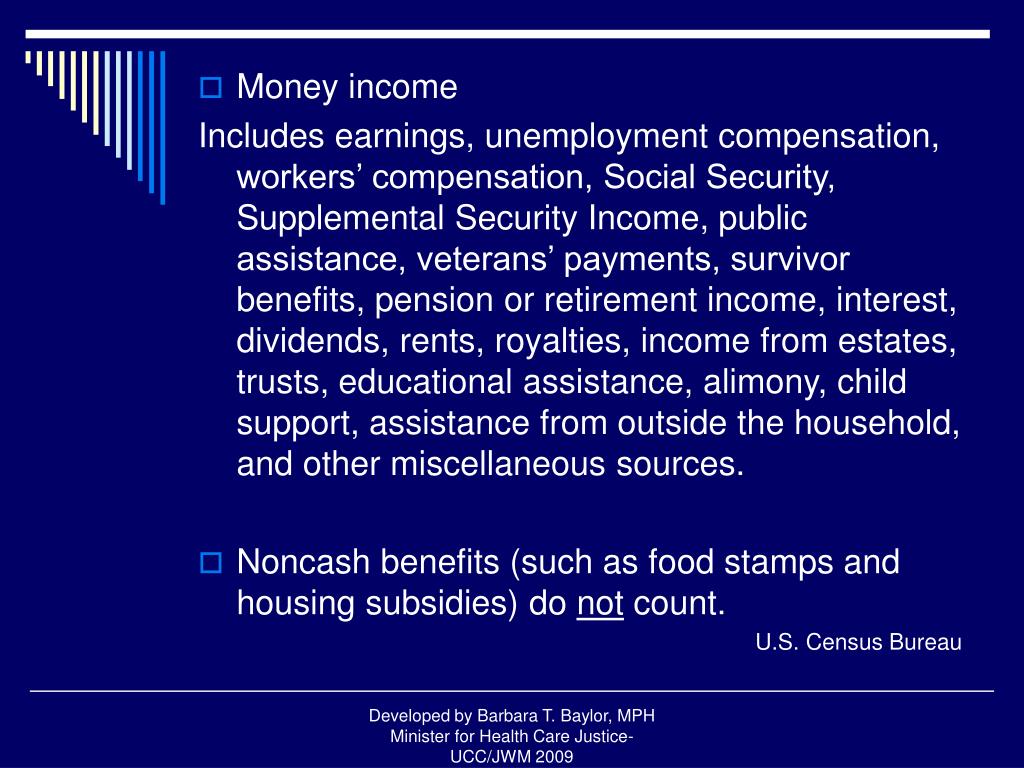
The concept of income is one that gives savings and purchase opportunities for an individual. However, income is difficult to define conceptually. Therefore, how we define income will vary based on the study area. Within this essay, we will look at some key elements of income. Additionally, we will discuss rents and interest payments.
Gross income
Total income or gross is total sum of your earnings before taxes. On the other hand, net income is the sum of your earnings after taxes. It is crucial to know the distinction between gross and net income so you can properly report your earnings. Gross income is a more accurate measure of your earnings , as it gives you a more accurate picture of how much money you have coming in.
Gross income refers to the amount that a business earns prior to expenses. It helps business owners evaluate numbers across different seasons and to determine the seasonality. It also allows managers to keep the track of sales quotas as well as productivity needs. Knowing how much the business earns before expenses is crucial for managing and growing a profitable firm. It helps small business owners examine how well they're performing compared to their competitors.
Gross income can be determined on a product-specific or company-wide basis. For instance, a company can determine profit per product by using tracker charts. If a product has a good sales an organization will enjoy a higher gross income when compared to a business with no products or services at all. This could help business owners decide which products to concentrate on.
Gross income includes interest, dividends rental income, casino winnings, inheritances, and other income sources. But, it doesn't include payroll deductions. When you calculate your income ensure that you take out any tax you are obliged to pay. Furthermore, your gross revenue should not exceed your adjusted gross net income. It is the amount you take home after you've calculated all the deductions you've taken.
If you're a salaried worker, you probably already know what net income will be. In the majority of instances, your gross income is the amount you receive before taxes are deducted. The information is available in your paystub or contract. If there isn't the document, you can obtain copies of it.
Gross income and net income are important parts of your financial life. Knowing and understanding them will aid in the creation of a schedule for your budget as well as planning for the next.
Comprehensive income
Comprehensive income is the change in equity over the course of time. The measure does not account for changes in equity resulting from investing by owners and distributions to owners. It is the most frequently used measurement to assess the performance of business. This kind of income is an crucial element of an organization's profit. It is therefore vital for business owners to comprehend the significance of this.
Comprehensive income is defined by FASB Concepts Statement no. 6 and is comprised of changes in equity in sources other than the owners the company. FASB generally adheres to the concept of all-inclusive income, however, it has made a few exceptions that require reporting of the change in assets and liabilities in the operation's results. The specific exceptions are listed in the exhibit 1, page 47.
Comprehensive income is comprised of revenue, finance costs, tax charges, discontinued operation, also profit sharing. It also includes other comprehensive income, which is the distinction between net income as and income on the statement of income and the comprehensive income. Additionally, other comprehensive income also includes gains that have not been realized in the form of derivatives and available-for-sale securities such as cash-flow hedges. Other comprehensive income can also include the actuarial benefits of defined benefit plans.
Comprehensive income is a way for companies to provide their those who are interested with additional information regarding the profitability of their operations. Unlike net income, this measure includes gains on holdings that aren't realized and foreign currency translation gains. While they're not part of net income, they're important enough to be included in the balance sheet. Additionally, it provides a more complete view of the company's equity.
Comprehensive income also includes unrealized gains and losses on investments. This is because the value of equity in a business may change during the period of reporting. But this value is not considered in the formula for calculating net income, because it's not directly earned. The difference in value is reflected by the credit section in the balance sheet.
In the near future it is expected that the FASB has plans to refine the accounting guidelines and guidelines that will make comprehensive income a more complete and important measure. The goal is to offer additional insight about the operation of the firm and enhance the ability to anticipate the future cash flows.
Interest payments
Income interest payments are paid at regular the tax rate for income. The interest earnings are added to the overall profit of the company. However, individuals also have to pay tax from this revenue based on their tax bracket. If, for instance, a tiny cloud-based software firm borrows $5000 in December 15th however, it has to pay interest of $1,000 on January 15 of the following year. This is quite a sum especially for small businesses.
Rents
If you own a house Perhaps you've read about rents as a source of income. What exactly are they? A contract rent is one that is set by two parties. It could also refer to the additional revenue attained by property owners who isn't required to do any additional work. For instance, a monopoly producer may charge more than a competitor but he or doesn't have to carry out any extra tasks. A differential rent is an extra profit that is generated due to the fertility of the land. It is usually seen in the context of extensive cultivating of the land.
Monopolies can also earn quasi-rents , if supply does not catch up with demand. In this scenario you can extend the meaning of rents and all forms of monopoly-related profits. This is however not a sensible limit to the meaning of rent. It is vital to understand that rents are only profitable when there is no overcapacity of capital in an economy.
Tax implications are also a factor on renting residential houses. This is because the Internal Revenue Service (IRS) makes it difficult to rent residential homes. So the question of whether or whether renting can be considered an income source that is passive is not an easy question to answer. The answer depends on numerous aspects however the most crucial is the amount of involvement throughout the course of the transaction.
When calculating the tax consequences of rental income you have take into consideration the risks in renting your property. It's not certain that you will always have renters so you could end at a property that is empty and no money at all. There are unexpected costs like replacing carpets or repair of drywall. In spite of the risk involved rental of your home may be a fantastic passive income source. If you can keep the expenses down, renting could be a good way for you to retire early. It is also a good option to use as an investment against rising costs.
Although there are tax considerations when renting a property and you need to be aware how rental revenue is assessed differently to income earned via other source. It is important to consult an accountant or tax expert prior to renting properties. Rent income could include pets, late fees and even the work performed by the tenant in lieu of rent.
In some cases they say no. Note — cdss’ current position is that this regulation is wrong and the child support disregard payment counts as income. Survivor benefits are counted by social security as income.
Here Is The Number To Contact, If You Have Any Questions About What Income Is Counted.
For households of 1 to 3 people, the standard deduction is $ 167 and for households of 4 people, it is $ 178 (higher for some larger households and for alaska, hawaii, and guam). The family may qualify for up to half of the deceased parent’s full retirement or disability benefit. If half the child’s benefits plus other income is $25,000 or more, the benefits are taxable.
If Survivor Benefits Are The Child’s Only Taxable Income, They Are Not Taxable.
Each state has their own criteria for determining eligibility for medicaid, housing assistance, food stamps, etc. Here is the number to contact, if you have any questions about what income is counted. The family subsistence supplemental allowance program was created in 2001 in.
If The Child Is Single, The Base Amount For The Child's Filing Status Is $25,000.
In the case above she would need to file taxes to have her social security survivors benefits count as income. This is true for most nontaxable social security income. Note — cdss’ current position is that this regulation is wrong and the child support disregard payment counts as income.
With That Said, The Rules Are A.
Most snap households need to have gross income under 200% of the federal poverty level. In some cases they say no. Social sec benefits wether paid directly to you or as death benefits.
For Snap Purposes, “Income” Includes Both Earned Income Such As Wages And Unearned Income Such As Supplemental Security Income (Ssi) And Veterans, Disability, And.
I just googled oregon’s monthly income cutoff for medicaid. When you apply for the marketplace or medicaid your eligibility is based on total household income, this includes income from survivor's benefits. Gross income is your monthly income before any taxes or deductions.
Post a Comment for "Do Survivor Benefits Count As Income For Food Stamps"