Doordash Income Per Hour
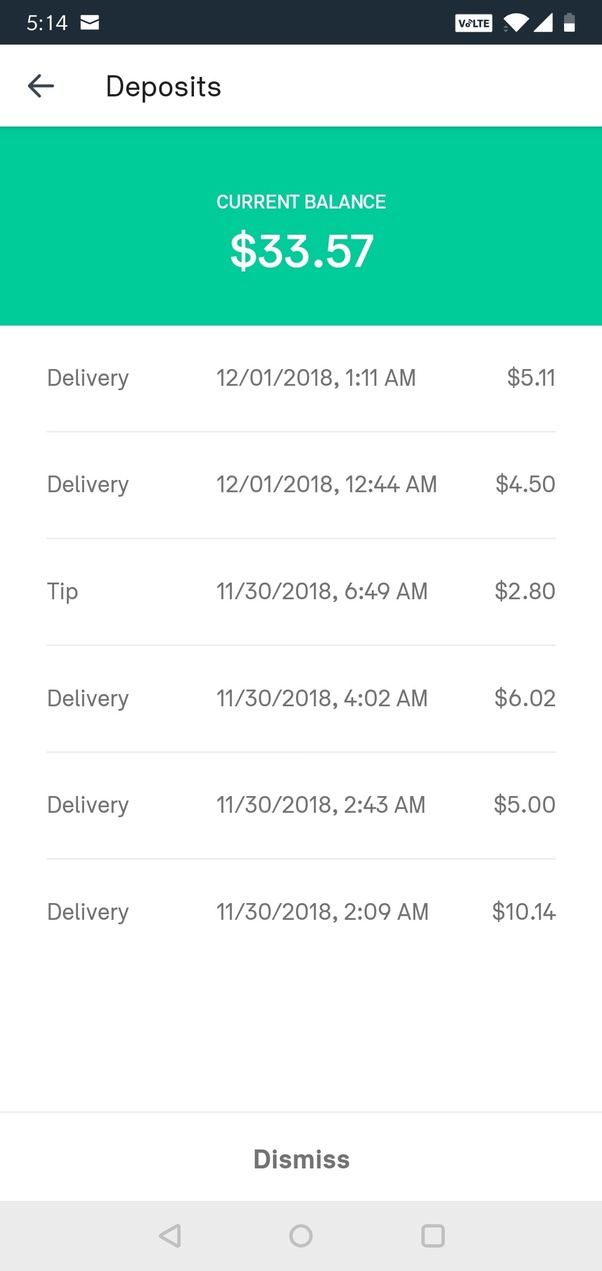
Doordash Income Per Hour. $19,000 to $45,000 per year with a national average of $27,000. Working washington crunched pay data from 229 delivery jobs from dashers around the united states, and found that the workers were making an average of $1.45 an hour, after taking into.
It is a price that can provide savings and consumption opportunities to an individual. However, income can be difficult to define conceptually. Therefore, the definition for income could vary according to the area of study. In this article, we'll look at some key elements of income. We will also take a look at interest payments and rents.
Gross income
The gross income refers to the amount of your earnings after taxes. In contrast, net earnings is the total amount of your earnings less taxes. It is important to understand the difference between gross and net income so that you are able to properly record your income. Gross income is the better measure of your earnings , as it will give you a better image of how much you make.
Gross income is the total amount the company earns prior to expenses. It allows business owners to analyze numbers across different seasons and determine seasonality. Managers also can keep an eye on sales quotas, as well as productivity requirements. Understanding how much an organization makes before expenses is essential for managing and expanding a profitable business. This helps small business owners know how they're competing with their peers.
Gross income is calculated either on a global or product-specific basis. For instance, a company can calculate profit by product using tracker charts. If a product sells well for the company, it will generate more revenue as compared to a company that does not sell products or services. This will allow business owners to pick which items to concentrate on.
Gross income is comprised of interest, dividends rental income, casino gains, inheritances and other income sources. But, it doesn't include deductions for payroll. If you are calculating your income be sure to subtract any taxes that you are obliged to pay. Moreover, gross income should not exceed your adjusted total income. This is what you actually take home when you've calculated all of the deductions that you've made.
If you're a salaried employee, you are probably aware of what your earnings are. In the majority of instances, your gross income is the sum you earn before the deductions for tax are taken. This information can be found on your pay stub or contract. In the event that you do not have this documentation, you may request copies.
Net income and gross earnings are critical to your financial situation. Understanding and comprehending them will aid you in creating a buget and prepare for what's to come.
Comprehensive income
Comprehensive income is the amount of change in equity throughout a period of time. This measure excludes changes in equity due to owner-made investments as well as distributions to owners. It is the most commonly used measurement to assess the business's performance. This is an significant aspect of an enterprise's performance. Hence, it is very vital for business owners to grasp this.
Comprehensive income will be described in the FASB Concepts statement no. 6, and it encompasses change in equity from sources other than the owners of the business. FASB generally adheres to this all-inclusive income concept, however, there have been some exceptions that require reporting of changes in the assets and liabilities within the results of operations. The specific exceptions are listed in exhibit 1, page 47.
Comprehensive income is comprised of financial costs, revenue, tax charges, discontinued operation and profit share. It also includes other comprehensive income which is the distinction between net income as in the income statement and the comprehensive income. In addition, other comprehensive income comprises gains that are not realized on available-for-sale securities and derivatives being used as cashflow hedges. Other comprehensive income can also include an actuarial gain from defined benefit plans.
Comprehensive income provides a means for companies to provide participants with more details regarding their performance. Unlike net income, this measure is also inclusive of unrealized holding gains as well as gains on foreign currency translation. Although these are not part of net income, these are significant enough to be included in the statement. Furthermore, it provides more of a complete picture of the company's equity.
Comprehensive income includes gains and losses that are not realized and losses from investments. This is because the amount of equity of a business may change during the reporting period. This amount, however, isn't included in the estimation of net income, because it's not directly earned. The differences in value are reflected within the Equity section on the balance sheet.
In the future in the future, the FASB is expected to continue to refine its accounting rules and guidelines making comprehensive income an greater and more accurate measure. The objective is to provide further insights into the company's operations and increase the capacity to forecast future cash flows.
Interest payments
Earnings interest are impozited at standard personal tax rates. The interest income is added to the total profit of the business. However, individual investors also need to pay taxes in this amount based upon your tax bracket. In the example above, if a small cloud-based application company loans $5000 on the 15th of December this year, it's required to be liable for interest of $1,000 on the 15th of January in the following year. That's a big sum especially for small businesses.
Rents
As a property owner If you own a property, you've probably read about rents as an income source. But what exactly are rents? A contract rent can be described as a rent which is decided upon between two parties. This could also include the additional income obtained by a homeowner who doesn't have to perform any additional work. A monopoly producer might charge more rent than a competitor in spite of the fact that he does not have to do any extra tasks. Similar to a differential rent, it is an additional revenue created by the fertility of the land. It typically occurs during extensive cultivation of land.
A monopoly can also earn quasi-rents up until supply catch up to demand. In this scenario it is possible to expand the meaning of rents across all types of monopoly earnings. However, it is not a practical limit for the definition of rent. It is important to know that rents are only profitable when there is no glut of capital in the economy.
There are tax implications in renting residential property. Taxes are a concern when you rent residential property. Internal Revenue Service (IRS) makes it difficult to rent residential homes. Therefore, the question of whether or not renting can be an income stream that is passive isn't an easy question to answer. The answer is contingent on a variety of factors and the most significant is the amount of involvement when it comes to renting.
In calculating the tax implications of rental income, it is important to think about the risk of renting out your property. It's not a sure thing that you will always have tenants as you might end being left with a vacant house or even no money. There are also unforeseen expenses such as replacing carpets or patching up drywall. There are no risks in renting your home, it can prove to be a lucrative passive income source. If you're able keep costs at a low level, renting can provide a wonderful way to save money and retire early. It can also serve as a hedge against inflation.
Although there are tax implications related to renting a house and you need to be aware rentals are treated in a different way than income earned on other income sources. It is crucial to consult the services of a tax accountant or attorney should you be planning on renting a property. Rental income can include the cost of late fees and pet fees and even any work performed by tenants in lieu of rent.
You’ll receive doordash pay at the rate of $14 per. Doordash pays an average salary of $84,776 per year, which is $40.76 an hour. Hourly pay at doordash ranges from an average of $11.01 to $23.31 an hour.
However, There's A Significant Range Between What The Company Pays The Top 10 Percent And.
Depending on how far the drives are, how long they take, and how. You sometimes can even earn more than $20 per hour. Doordash annual income can be estimated.
A Key Source Of Income To Consider When Asking How Much Does A Doordash Doordasher Make Or Receive As Pay Per Hour Is Tips.
A doordash driver makes between $20 and $25 per hour. You’ll receive doordash pay at the rate of $14 per. Get paid a guaranteed rate per hour while on deliveries, plus tips.
Hourly Pay At Doordash Ranges From An Average Of $11.01 To $23.31 An Hour.
Let’s use doordash’s data of the $23 per hour earnings on average. How much do doordash employees hourly make in the united states? $14,500 to $64,000 per year with a national average of $36,565.
Doordash Pays An Average Salary Of $84,776 Per Year, Which Is $40.76 An Hour.
Here’s what some other sources say about doordash driver pay. According to doordash, the average hourly pay for dashers is $23 per hour. I've been doing the door dash for 6 months and repeatedly run into problems waiting on the food to be ready for delivery or finding the customer.
Distance, Time, And Desirability All Play A Role In This.
Doordash also pays 100% of income. The driver’s pay is determined by base pay, ranging from $2 to $10. Salary estimated from 429 employees, users, and past and present job.
Post a Comment for "Doordash Income Per Hour"