Income Limit For Ssdi
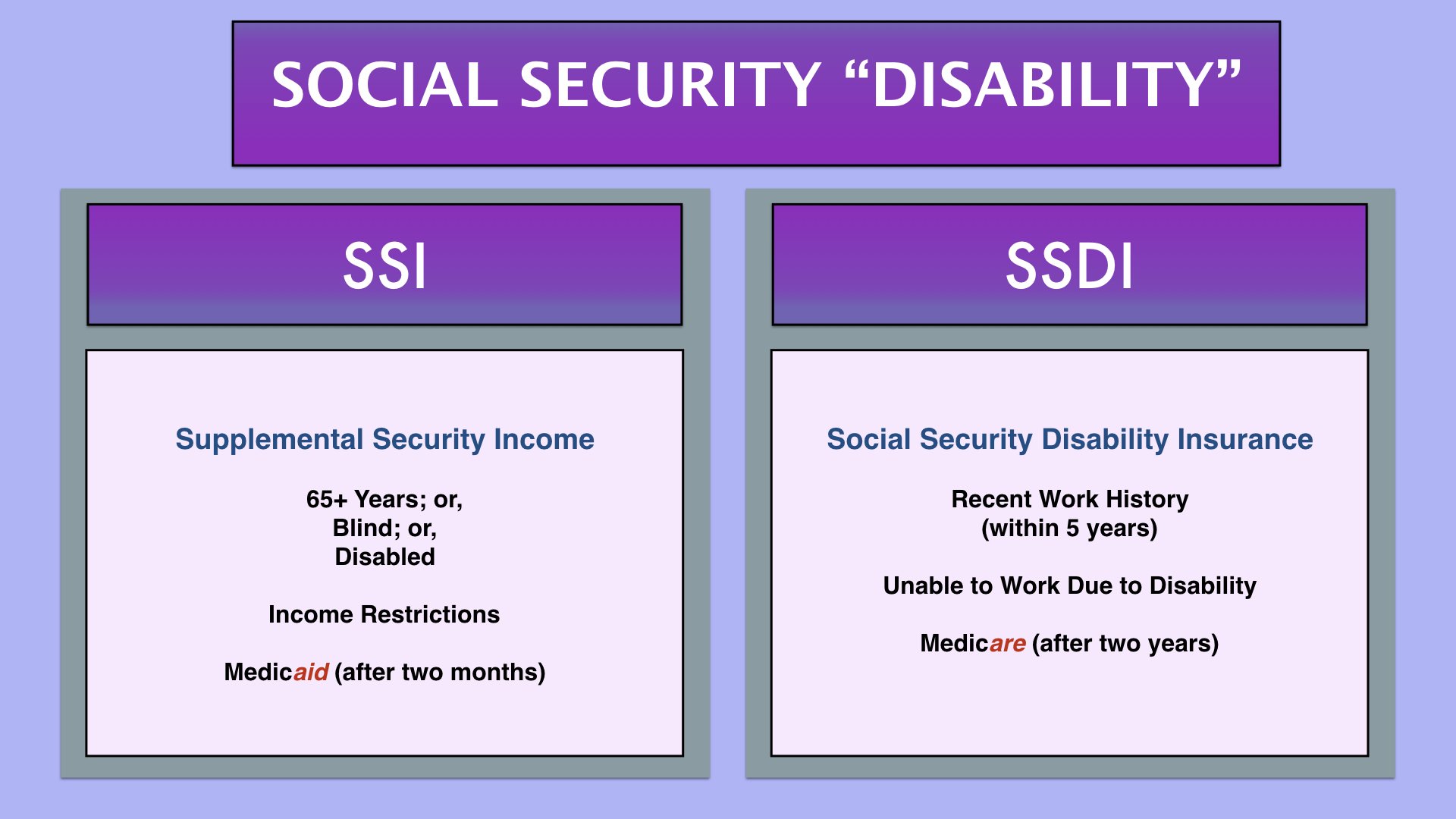
Income Limit For Ssdi. A disabled person applying for ssdi may not earn more than $1,260 per month (in 2020) by working. Only some of the income an adult or child receives during the month counts toward the.
It is a price that creates savings and spending opportunities for an individual. However, income can be difficult to conceptualize. Thus, the definition of income can vary based on what field of study you are studying. For this post, we will explore some important aspects of income. We will also consider rents and interest payments.
Gross income
Total income or gross is total amount of your earnings before taxes. While net income is the total amount of your earnings less taxes. It is essential to grasp the distinction between gross income and net revenue so that you can properly report your income. Gross income is a better gauge of your earnings as it offers a greater understanding of how much your earnings are.
Gross income is the total amount that a company earns before expenses. It allows business owners to look at the sales of different times in order to establish the degree of seasonality. It also helps managers keep records of sales quotas along with productivity requirements. Understanding the amount of money a company earns before expenses is essential to managing and building a successful business. It helps small business owners examine how well they're doing in comparison to their competition.
Gross income can be calculated on a product-specific or company-wide basis. For instance, a company can determine profit per product by using charting. If a product does well and the business earns a profit, it will have greater profits than a firm that does not offer products or services at all. This can help business owners decide which products to concentrate on.
Gross income is comprised of dividends, interest rent, gaming winnings, inheritances and other sources of income. But, it doesn't include payroll deductions. If you are calculating your income be sure to remove any taxes you're obliged to pay. Additionally, your gross income must not exceed your adjusted earning capacity, what you take home after you've calculated all the deductions that you've made.
If you're salaried, you probably already know what your total income would be. In the majority of instances, your gross income is what that you receive before tax deductions are made. The information is available on your pay stub or contract. In the event that you do not have the documentation, you can get copies of it.
Gross income and net income are important parts of your financial life. Understanding them and understanding their meaning will aid in the creation of a financial plan and budget for your future.
Comprehensive income
Comprehensive income is the sum of the changes in equity over a set period of time. This measure excludes changes in equity resulting from owner-made investments as well as distributions to owners. This is the most widely employed measure to assess the success of businesses. The amount of money earned is an significant element of a business's financial success. It is therefore essential for business owners be aware of the importance of it.
Comprehensive earnings are defined in the FASB Concepts Declaration no. 6. It covers changes in equity derived from sources other than the owners of the company. FASB generally follows this all-inclusive income concept, but has occasionally made specific exceptions that require reporting adjustments to liabilities and assets within the results of operations. The exceptions are detailed in exhibit 1, page 47.
Comprehensive income comprises financing costs, revenue, taxes, discontinued operations and profits share. It also includes other comprehensive earnings, which is the difference between net income and income on the statement of income and comprehensive income. Additional comprehensive income includes gains not realized from securities available for sale as well as derivatives held as cash flow hedges. Other comprehensive income can also include gains from actuarial analysis from defined-benefit plans.
Comprehensive income is a way for companies to provide their stakeholders with additional information about their financial performance. Much like net income, this measure contains unrealized hold gains and foreign currency exchange gains. While they're not part of net income, they're crucial enough to be included in the statement. In addition, they provide the most complete picture of the equity of the company.
Comprehensive income includes gains and losses that are not realized and losses on investments. This is because the worth of equity in an enterprise can change during the period of reporting. The equity amount is not considered in the determination of the company's net profits as it is not directly earned. The variation in value is recorded on the financial statement in the section titled equity.
In the future as time goes on, the FASB will continue to refine its accounting standards and guidelines making comprehensive income an more thorough and crucial measure. The aim is to provide more insight on the business's operations and increase the possibility of forecasting the future cash flows.
Interest payments
Income interest payments are paid at regular taxes on income. The interest earned is added to the overall profit of the business. However, individual investors also need to pay tax in this amount based upon their tax bracket. For instance, if a small cloud-based technology company borrows $5000 in December 15th however, it has to pay $1,000 in interest on the 15th of January in the next year. That's a big sum even for a small enterprise.
Rents
As a property proprietor perhaps you have seen the notion of rents as an income source. What exactly are rents? A contract rent can be described as a rent which is decided upon between two parties. It can also refer to the additional revenue attained by property owners that isn't obligated to perform any additional tasks. For instance, a producer who is monopoly may charge higher rent than a competitor and yet he or does not have to undertake any additional work. A differential rent is an additional profit created by the soil's fertility. The majority of the time, it occurs during intensive cultivation of land.
Monopolies also pay rents that are quasi-rents until supply can catch up with demand. In this situation, rents can extend the definition of rents to any form of monopoly profit. But this is not a proper limit in the sense of rent. It is imperative to recognize that rents are only profitable when there is no supply of capital in the economy.
There are tax implications with renting residential properties. It is important to note that the Internal Revenue Service (IRS) doesn't make it simple to rent residential property. So the question of how much renting a passive source of income isn't an easy question to answer. The answer will depend on many factors but the main one is your level of involvement when it comes to renting.
When calculating the tax consequences of rental income, it is important to think about the risk of renting out your house. This isn't a guarantee that you'll always have renters as you might end with a house that is vacant without any money. There are also unforeseen expenses which could include replacing carpets as well as the patching of drywall. With all the potential risks that you rent your home, it could be a good passive income source. If you're able maintain the costs low, it can be a good way in order to retire earlier. It is also a good option to use as protection against inflation.
Although there are tax concerns when renting a property It is also important to understand rentals are treated differently to income earned out of other sources. It is crucial to consult an accountant or tax attorney prior to renting properties. Rents can be a result of late fees, pet costs, and even work performed by the tenant for rent.
There is an income limit on what you earn through work. That’s an increase of $40 per month from 2021 when earners were limited to $1,310. The current maximum amount for.
The Exception To This Dollar Limit Is In The Calendar Year That You Will.
The 6.2% oasdi tax, which funds various social security programs, applies only to the first $147,000 of a worker’s earnings for 2022. Are there ssdi income limits that might affect my benefits? If that older adult lives with a family caregiver, the amount is $764.25 or.
For Every $2 You Exceed That Limit, $1 Will Be Withheld In Benefits.
Blind ssi applicants or recipients didn't have an sga limit. Also, as of january 2013, individuals with earned income of more than $200,000 ($250,000 for married couples filing jointly) pay an. Substantial income results from what the ssa refers to as “substantial gainful activity” (sga).
According To The Ssa, Ssdi Claimants Are Entitled To.
If you ultimately believe you can do some work, you may be able to continue receiving ssdi payments as long as you do not do work that earns enough to suggest that you. That’s an increase of $40 per month from 2021 when earners were limited to $1,310. The income limit is simply based on the rule that if you can work, you are not considered disabled.
A Disabled Person Applying For Ssdi May Not Earn More Than $1,260 Per Month (In 2020) By Working.
In other words, though this is great news for recipients of social security benefits such as. If you collect social security early, say at 62, and earn income from work that exceeds the income limit, social security will deduct $1 from your benefit. To qualify for ssdi in 2020, you cannot earn more than $1,260 per month.
To Collect Social Security Disability (Ssd) Benefits, There's An Income Limit On Money Earned From Working And Ssd Can Be Denied If Earnings Are Too High.
This does mean that things could change. For 2022, the social security earnings limit is $19,560. In 2021, the very minimum income limit for ssi was the federal benefit rate (fbr), which stood at $794 per month for a single individual, or $9,528 annually, and $1,191 per.
Post a Comment for "Income Limit For Ssdi"